Quartz, quartzite or marble: choosing without regret
Three materials that look similar in a photo and behave nothing alike in a working kitchen. What each one tolerates, what it does not, and how to decide in front of a real slab.
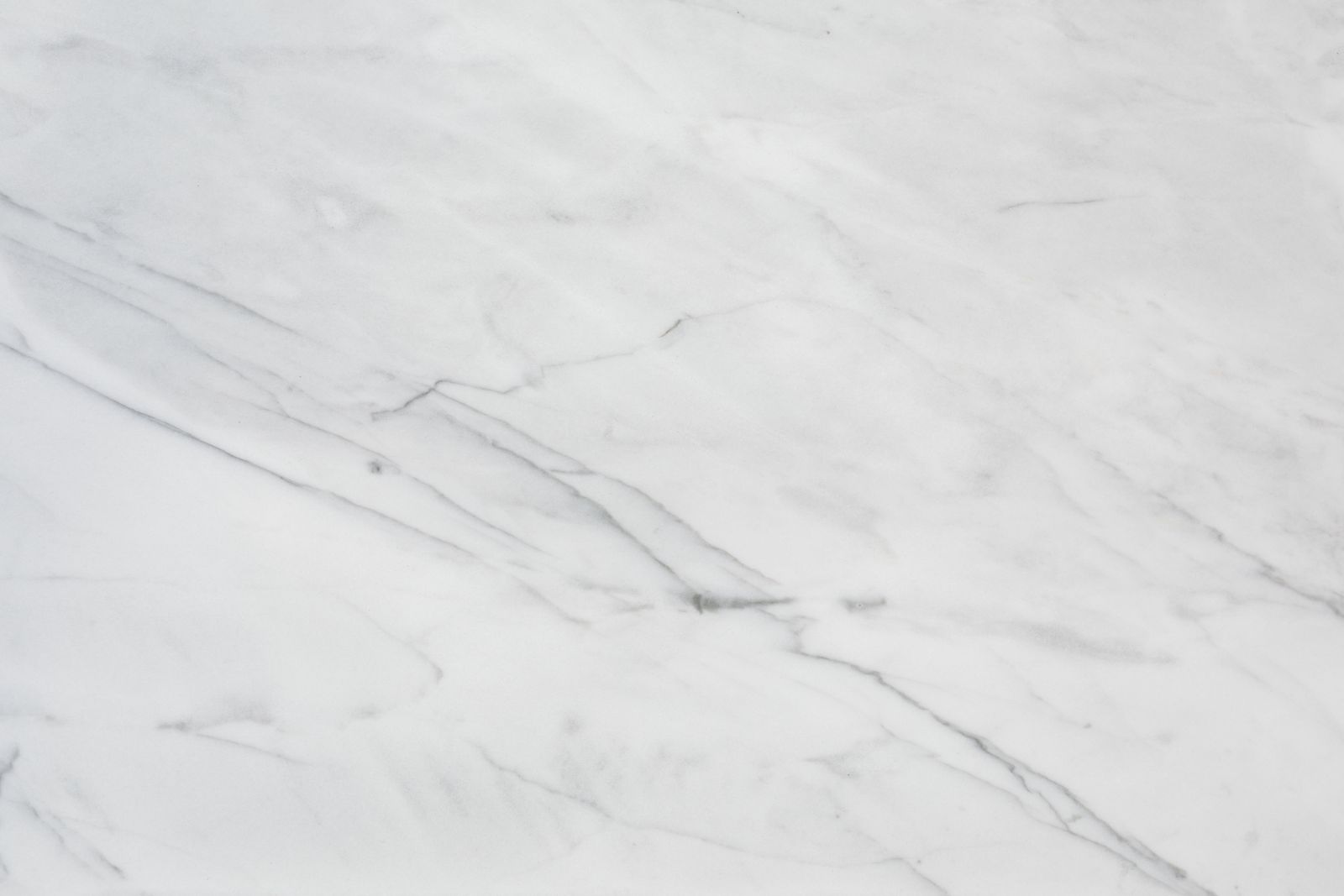
Roughly a third of the questions we get at the sample bench are some version of this: I want the look of marble, what should I actually buy? It is a fair question, and the honest answer depends less on the material and more on how you cook and how much patina you can tolerate.
What they actually are
These three materials have almost nothing in common geologically, which is why they behave so differently.
- Engineered quartz is roughly 90 percent ground natural quartz bound in polymer resin, manufactured in slabs. It is non-porous and completely consistent.
- Quartzite is sandstone that heat and pressure turned into an interlocking quartz crystal structure. It is natural, very hard, and often looks strikingly like marble.
- Marble is metamorphosed limestone, which means it is calcium carbonate. That single fact explains everything about how it behaves.
The acid question
Calcium carbonate reacts with acid. Lemon juice, wine, vinegar, tomato and many household cleaners will dull the polish of marble wherever they sit. This is called etching, and it is not a stain, not a defect and not something sealing prevents. A sealer resists absorption. Nothing stops a chemical reaction on the surface.
This is the single fact that decides most of these conversations. Some people find etched marble beautiful and buy it honed so the etches barely read. Others discover the first ring under a wine glass and are devastated. Both reactions are legitimate. Know which one you are before the slab arrives.
Quartzite does not etch, because it is silica rather than carbonate. Quartz does not etch either. If you want marble's look without that behavior, quartzite is the answer and it has been for a decade.
Heat
Natural stone laughs at heat. Granite, quartzite, soapstone and marble will all take a hot pan straight off the burner without complaint, though we still hand out trivets because thermal shock can matter on a thin edge.
Engineered quartz is the exception. The resin binder softens and can scorch or yellow somewhere above 300 degrees Fahrenheit, which a cast iron pan clears easily. If you routinely pull heavy pans out of a 450 degree oven and set them down without thinking, quartz is going to disappoint you eventually.
Quartz for consistency, quartzite for natural movement without the anxiety, marble for people who want the patina and mean it.
Maintenance, honestly
Quartz needs nothing. Soap and water, forever. That is the entire care routine, and it is why it dominates family kitchens.
Quartzite wants an impregnating sealer roughly twice a year. The test is simple: leave a few drops of water on the surface for fifteen minutes. If the stone darkens where the water sat, it is time to reseal. That takes about twenty minutes for a whole kitchen.
Marble wants the same sealing plus an acceptance that it is going to change. Honed marble hides etching far better than polished. Many of our clients who chose marble tell us they stopped noticing after month four.
What things cost, roughly
Sample ranges for installed material in our market, including fabrication and setting, as of this year. Your actual numbers depend on slab selection, square footage, edge profile and cutouts.
- Engineered quartz: the widest range of any material, from entry-level patterns to premium veined lines
- Domestic granite: frequently the best value per square foot in natural stone
- Quartzite: typically a step above granite, with exotic material considerably higher
- Marble: varies enormously by source, from accessible domestic stone to imported statuary
We avoid publishing per-square-foot figures because they mislead. A small kitchen that needs two slabs because of one awkward run costs more than a larger kitchen that fits on one.
How to actually decide
Go to the slab yard. Not the showroom sample rack, the yard. A four-inch chip tells you nothing about how a stone moves across eight feet, and movement is the entire point of natural material.
Stand in front of the slab, take a photo with your phone in daylight, and then go home and look at it in your kitchen's actual light. Stone that looks warm under yard fluorescents can read grey in a north-facing Madison kitchen in February.
Then ask the fabricator to show you the seam layout on that slab before you commit. Where a seam lands, and what the vein does across it, is the difference between a countertop you admire and one you keep noticing.