Reface or replace? A test you can run this evening
Refacing costs about a third of replacement and takes about two weeks. It is also the wrong answer more often than the companies selling it admit. Here is how we decide.
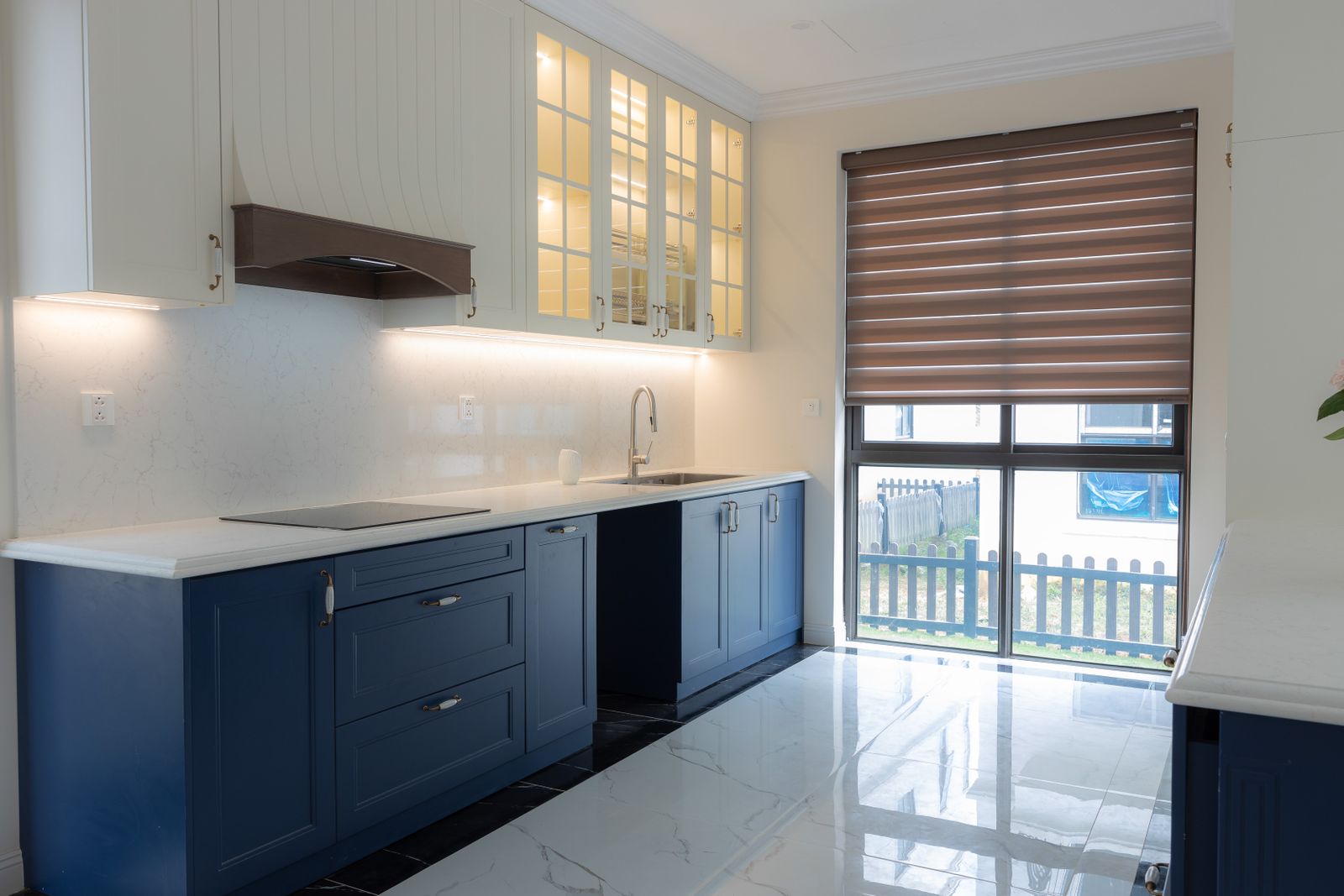
Refacing gets sold aggressively, and for good reason: when it is the right call, it is a genuinely excellent deal. New doors, new drawer fronts, matching veneer on every visible surface and new hardware, for roughly a third of the cost of new cabinetry, installed in eight to twelve days.
When it is the wrong call, you have spent fifteen thousand dollars putting beautiful doors on a kitchen that still does not work. We turn down refacing work regularly, and the reasons are always the same three.
Test one: press the cabinet bottoms
Open the cabinet under your sink and press firmly on the bottom panel with your thumb. Then do the same in two other base cabinets.
If it flexes, if you see a dark swollen edge, or if the surface feels soft, you have particleboard that has taken on water. Particleboard does not recover. Refacing that box means hanging a three-hundred-dollar door on a carcass with a limited remaining life.
Plywood boxes feel solid and show layered edges where the material is exposed. Most cabinetry built from the late 1990s onward in this market used plywood, which is why so much Middleton and Verona housing stock is a good candidate.
Test two: open two doors and look at the gap
Open two adjacent doors halfway and look at the reveal between them. Is it parallel? Now close them and look at the gap along the top edge of the run.
If cabinets have settled out of level, or if a face frame has racked, new doors will amplify the problem rather than hide it. Crisp new doors on a wavy run look worse than tired doors on a wavy run, because the eye has a clean line to compare against.
Test three: the ninety-second walk
This is the one that matters most and the one nobody runs. Stand in your kitchen and go through a normal weeknight dinner in your head, physically moving as you do it.
- Take groceries from the door to the refrigerator. Did you have anywhere to set them down?
- Pull out a cutting board and chop. Is there a clear run of counter, or did you have to move three things first?
- Open the dishwasher while someone walks behind you. Did they have to wait?
- Reach for the pot you use most. Did you kneel? Did you move another pot to get it?
If two or more of those produced a wince, your problem is the layout, and refacing cannot touch the layout. New doors on a bad plan is the most expensive way to stay frustrated.
Refacing fixes how a kitchen looks. It cannot fix how a kitchen works. Be honest with yourself about which one is bothering you.
The middle path most people miss
There is an option between the two that we propose more often than either extreme: reface most of the kitchen, and build new where the layout needs to change.
A typical version looks like this. The sink wall and the long run get refaced. The corner cabinet nobody can reach gets replaced with a new unit containing a proper pull-out. A new full-height pantry gets built where a half-height cabinet used to sit. All the new pieces get the same doors and finish as the refaced run, because we build both.
Clients who take this route usually spend 40 to 60 percent of a full replacement and solve the actual problem, which is rarely the doors.
One upgrade to insist on
If you do reface, add new dovetailed drawer boxes on full-extension undermount slides. Your existing drawers almost certainly ride on side-mount slides that extend three quarters of the way and stop.
Full extension means the back of the drawer clears the cabinet. You can actually see and reach everything in it. In post-project conversations, that upgrade gets mentioned more often than the doors do.
It adds cost per drawer, it is not glamorous, and it is the change our clients notice every single day for the next twenty years.